A lease signed in 1886, running for 999 years, still governs one of India’s most contested pieces of water infrastructure today. Mullaperiyar Dam sits entirely within Kerala, yet Tamil Nadu owns and operates it — a colonial-era arrangement that has survived British rule, Indian independence, and more than a century of engineering debate, and remains the subject of active Supreme Court hearings even now.
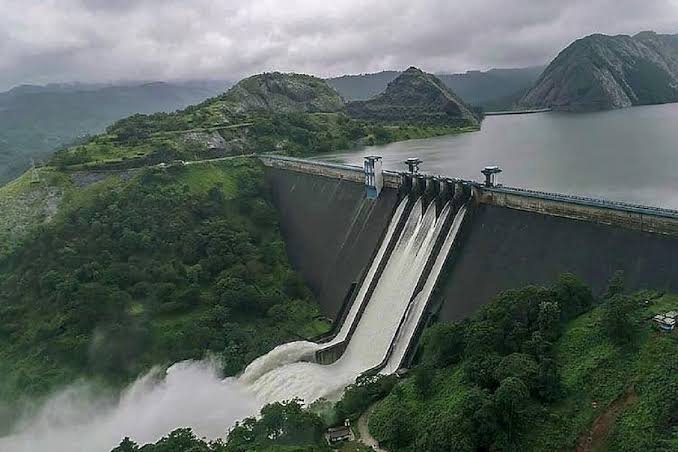
Mullaperiyar Dam: Overview
| Parameter | Details |
| State | Kerala (dam location); operated by Tamil Nadu |
| District | Idukki |
| Location | Thekkady, Cardamom Hills, Western Ghats, near/within Periyar Tiger Reserve |
| Elevation | Approx. 881 metres |
| Rivers | Built at the confluence of the Periyar and Mullayar rivers |
| Dam type | Masonry gravity dam |
| Built by | John Pennycuick, British engineer |
| Construction period | 1887 to 1895 |
| Original purpose | Diverting Periyar water eastward to the drought-prone Madurai region |
| Lease | 999-year lease, signed 29 October 1886, between the Maharaja of Travancore and the Secretary of State for India |
| Lease renewed | 1970, between Kerala and Tamil Nadu, also permitting hydroelectric generation |
| Water level history | Original level approx. 152 ft; lowered to 136 ft after 1979 safety concerns; raised to 142 ft following 2006/2014 Supreme Court rulings |
| Key legal body | Supervisory Committee under the National Dam Safety Authority |
| Governing law | Dam Safety Act, 2021 |
| Current status | Active, ongoing Supreme Court proceedings between Kerala and Tamil Nadu |
| Best time to visit | October to February |
The Periyar and Mullayar Rivers: An Engineering Feat That Reverses a River’s Course
Mullaperiyar Dam sits at the confluence of the Periyar and Mullayar rivers in Kerala’s Idukki district, within the Cardamom Hills of the Western Ghats, at an elevation of roughly 881 metres. The Periyar is Kerala’s longest river, naturally flowing west toward the Arabian Sea — yet the entire purpose of this dam was to override that natural direction.
British engineer John Pennycuick designed the project specifically to divert Periyar water eastward through a tunnel, sending it toward the arid rain-shadow districts around Madurai in what was then the Madras Presidency, a region that received far less rainfall than Kerala’s western slopes and desperately needed a reliable irrigation source. A few points about this engineering achievement:
- The dam effectively reverses the natural drainage of a significant volume of Periyar water, redirecting it across the Western Ghats watershed divide into the Vaigai river basin on the Tamil Nadu side
- This diversion transformed agriculture across a historically water-scarce stretch of southern Tamil Nadu, a benefit that continues today, well over a century after construction
- The dam’s location, now within or adjacent to the Periyar Tiger Reserve, places it within a genuinely significant wildlife and biodiversity zone, adding ecological considerations to an already complex water-management picture
History: A 19th-Century Colonial-Era Lease Still in Force Today
The dam’s legal foundation dates to 29 October 1886, when a 999-year lease indenture was signed between the Maharaja of Travancore (the princely state that later became part of Kerala) and the Secretary of State for India, representing British colonial authority. This agreement granted the Madras Presidency — predecessor to modern Tamil Nadu — rights to 8,000 acres of land and control over the dam’s water resources for irrigation purposes.
Construction proceeded between 1887 and 1895, and the arrangement continued largely unchanged through the following decades, surviving India’s transition to independence:
- In 1947, following independence, the Kerala government contended that the original colonial-era lease was invalid and needed to be renewed under the new constitutional framework
- The agreement was formally renewed in 1970 between the states of Kerala and Tamil Nadu, with Tamil Nadu continuing to operate the dam while making payments to Kerala, and this renewed agreement additionally permitted Tamil Nadu to generate hydroelectric power using the diverted water
- This 1970 renewal effectively transformed a colonial-era arrangement into a formal interstate agreement between two independent Indian states, a legal foundation that continues to underpin the dam’s operation today
The 1979 Safety Scare and Decades of Dispute
The dispute that continues today traces back to 1979, when reports emerged in Kerala that a minor earthquake had caused cracks in the ageing dam structure. This triggered the Central Water Commission to examine the dam and recommend emergency measures.
Key developments that followed:
- As an emergency precaution, the water level was lowered from approximately 152 ft down to 136 ft, a decision reached through tripartite discussions involving both states and central authorities
- By the mid-1990s, after completing what it described as dam strengthening works, Tamil Nadu began pressing to restore the water level closer to its original capacity, arguing the dam remained structurally sound
- Kerala maintained ongoing concerns about the dam’s age and safety, given it was already well over a century old, and questioned whether raising the water level was prudent given the structure’s history
This fundamental disagreement — Tamil Nadu’s position that the dam remains safe and capable of operating at higher water levels versus Kerala’s concerns about the risks of an ageing structure — has defined the dispute for over four decades.
Supreme Court Rulings and the Ongoing Legal Battle
The Mullaperiyar dispute has moved through India’s judicial system repeatedly over the past two decades, with the Supreme Court issuing several significant rulings:
- In 2006, the Supreme Court ruled to allow the water level to be raised to 142 ft
- Kerala responded by passing the Kerala Irrigation and Water Conservation (Amendment) Act, 2006, seeking to cap the level at 136 ft on safety grounds
- In 2014, the Supreme Court declared this Kerala state law invalid, upholding Tamil Nadu’s right to maintain the water level at 142 ft, and established a permanent Supervisory Committee to oversee the dam’s ongoing safety
- An earlier Empowered Committee, chaired by former Chief Justice of India A.S. Anand and including former Supreme Court judges representing both states, had been tasked in 2010 with examining all aspects of the then-119-year-old dam, submitting its findings in a sealed report
Following the Dam Safety Act, 2021, which established the framework for a National Dam Safety Authority (NDSA), the Supreme Court in April 2022 directed the existing Supervisory Committee to continue operating, expanded to include a technical expert from each state, until the NDSA became fully operational.
Recent Developments: Where Things Stand
The dispute has remained genuinely active into 2025, with the Supreme Court continuing to hear the matter. Key recent developments include:
- A new Supervisory Committee under the National Dam Safety Authority was constituted, with its chairman appointed on 3 January 2025
- In February 2025, the Supreme Court directed this committee to address Tamil Nadu’s concerns regarding permissions for activities including tree cutting, material transport, and road repairs near the dam, with the court notably observing that the two states were “fighting like school children” over the matter
- Tamil Nadu’s position, presented through its counsel, has argued that Kerala has repeatedly delayed routine maintenance work — including painting, patch repairs, and staff quarters maintenance — sometimes for periods exceeding a year
- Kerala’s position, presented through its own counsel, has argued that Tamil Nadu has avoided certain dam safety reviews required under the 2021 Dam Safety Act, and has separately questioned the composition of the Supervisory Committee itself
- In May 2025, the Supreme Court directed both states to act upon the Supervisory Committee’s recommendations
This situation remains actively contested and unresolved as of the most recent available information. Given the ongoing nature of Supreme Court proceedings, readers seeking the very latest status of this dispute should consult current news sources, since developments continue to evolve.
Engineering Specifications
Mullaperiyar Dam is a masonry gravity structure, built using construction techniques characteristic of late-19th-century British colonial engineering in India. Its core function — diverting water across a watershed divide through a tunnel system — remains a genuinely sophisticated achievement for infrastructure completed in 1895, more than a century before more modern interbasin transfer projects became common practice in Indian water engineering.
Given the dam’s advanced age and the ongoing legal and technical scrutiny it faces, precise current structural specifications are subject to continuous assessment by the Supervisory Committee and related authorities rather than static historical figures.
Planning a Visit to Mullaperiyar Dam
For anyone considering a trip:
- Location: The dam sits near Thekkady, within or adjacent to the Periyar Tiger Reserve, a well-established Kerala tourism destination in its own right
- Best season: October through February offers the most comfortable weather for visiting this Western Ghats region
- Access considerations: Given the dam’s contested legal status and its position within a sensitive wildlife reserve, visitor access to the dam structure itself may be limited or regulated, so checking current visitor guidelines through Kerala Tourism or Periyar Tiger Reserve authorities before planning a close visit is advisable
- Combine with Periyar wildlife tourism: Most visitors to this area come primarily for the Periyar Tiger Reserve’s wildlife and boat safari offerings, with the dam serving as a point of historical and engineering interest alongside the broader trip
FAQs
Q1. Is Mullaperiyar Dam safe to visit, given the ongoing safety dispute between Kerala and Tamil Nadu?
The dispute primarily concerns the dam’s long-term structural safety and water-level management rather than immediate visitor risk, but given the sensitivity and contested legal status of the site, checking current access guidelines through Kerala Tourism or Periyar Tiger Reserve authorities is a sensible precaution before planning a visit.
Q2. Why does Tamil Nadu, and not Kerala, control a dam that sits entirely within Kerala’s territory?
This arrangement traces back to a 999-year lease signed in 1886 between the Maharaja of Travancore and British colonial authorities, later renewed as a formal interstate agreement between Kerala and Tamil Nadu in 1970, granting Tamil Nadu continued rights to operate the dam and divert its water in exchange for payments to Kerala.
Q3. Has the Supreme Court definitively resolved whether the dam is safe at its current water level?
The Supreme Court’s 2014 ruling upheld Tamil Nadu’s right to maintain the water level at 142 ft, but ongoing disputes over maintenance access and safety compliance mean the matter continues to be actively litigated, with a Supervisory Committee under the National Dam Safety Authority continuing to oversee the issue as of the most recent available information.
Q4. What would happen to communities in Kerala if the dam’s safety concerns were ever realised?
Concerns raised by Kerala regarding this scenario center on potential flooding risk for downstream settlements in Idukki district and the surrounding Periyar Tiger Reserve area, which is precisely why dam safety monitoring and the ongoing Supreme Court oversight remain such a significant and closely watched issue for the state.