Two years after Tighra Dam was first built, it failed catastrophically — a collapse that killed an estimated 1,000 people downstream and remains one of the deadliest dam disasters in Indian history. Rebuilt a decade later, the structure would go on to fail again, partially, in 1970. Today, more than a century after that original tragedy, the same site quietly supplies drinking water to Gwalior city and draws weekend picnickers for boating and speed-boat rides, its violent history largely unknown to most visitors.
Tighra Dam: Overview Table
| Parameter | Details |
| State | Madhya Pradesh |
| Location | Tighra village, near Gwalior |
| Distance from Gwalior | Approx. 20–23 km |
| Also known as | Tigra Dam, Tig Dam |
| River | Sank River |
| Original construction | 1915 |
| Catastrophic failure | 19 August 1917 |
| Estimated deaths | Approx. 1,000 people |
| Cause of failure | Water infiltration into sandstone foundations |
| Dam rebuilt | 1927 |
| Second (partial) failure | 1970 |
| Current height (crest) | 24 metres (79 ft) |
| Current length | 1,341 metres (4,400 ft) |
| Reservoir capacity | 4.8 million cubic metres |
| Spillway discharge capacity | 1,274 cubic metres/second |
| Purpose | Drinking water, irrigation, domestic supply |
| Villages served | 11 nearby villages, plus Gwalior city |
| Surrounding protected area | Ghatigaon Wildlife Sanctuary, declared 1981 |
| Popular activities | Boating, speed boating, paddle boating |
| Best time to visit | Monsoon season (July–September) for water levels; October–February for weather |
The Sank River and Eleven Villages That Depend on It
Tighra Dam sits across the Sank River near Tighra village, roughly 20 to 23 km from Gwalior city. The dam was built specifically in proximity to eleven surrounding villages, which continue to depend on it directly for irrigation, drinking water, and general domestic use — alongside its larger role as a primary drinking water source for Gwalior itself.
A few points about this dual local-and-city role:
- The dam’s positioning near this cluster of villages reflects a deliberate design choice, ensuring the reservoir could serve both immediate agricultural communities and the larger urban demand from Gwalior
- The surrounding plateau functions as an important catchment area, feeding the reservoir primarily through monsoon rainfall
- This combination of serving both rural and urban water needs from a single reservoir is a pattern common to many mid-sized Indian dams, though Tighra’s history gives this otherwise ordinary function particular weight
A Princely-Era Dam and the 1917 Tragedy
Tighra Dam’s original structure was built in 1915, during the era of princely Gwalior State, predating India’s independence by more than three decades. Its early history, however, was marked by genuine catastrophe rather than steady service.
On the afternoon of 19 August 1917 — just two years after construction — the original dam failed due to water infiltration into its sandstone foundations. The resulting flood killed an estimated 1,000 people downstream, making it one of the deadliest dam failures documented in Indian history.
A few points about this tragedy:
- The failure was specifically attributed to structural inadequacy in the dam’s sandstone foundation, which proved unable to withstand sustained water infiltration
- The scale of loss — approximately 1,000 lives — places this failure among the most severe dam-related disasters recorded anywhere in India, underscoring the genuine human stakes involved in early 20th-century dam engineering before modern safety standards and monitoring practices were established
- This event occurred well before India’s independence, during a period when engineering oversight and safety review processes for major infrastructure projects differed considerably from modern practice
Rebuilding After Disaster: 1927 and a Second Failure in 1970
Following the 1917 catastrophe, the dam was rebuilt, with the new structure completed in 1927 — a full decade after the original failure. This reconstruction presumably incorporated lessons learned from the earlier foundation failure, though the site’s troubled engineering history wasn’t entirely behind it.
In 1970, the rebuilt structure experienced a further partial failure. A few points about this second incident:
- While details of the 1970 failure’s specific cause and full consequences aren’t as extensively documented as the 1917 disaster, its occurrence — a second structural failure at the same site within roughly five decades — reflects genuinely persistent engineering challenges at this particular location
- The dam has continued operating since this 1970 incident, suggesting subsequent repairs and reinforcement work addressed whatever vulnerabilities contributed to this second failure
- This history of two separate failures across the dam’s operational lifetime makes Tighra a notable, if sobering, case study in the long-term structural challenges facing dams built on sandstone foundations
Engineering Specifications of Today’s Dam
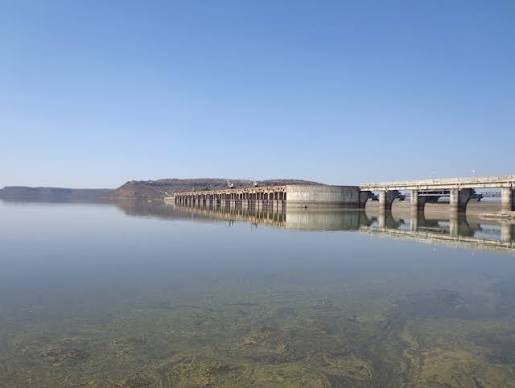
The current Tighra Dam structure, as it stands following its post-1917 and post-1970 repairs and reconstruction, is 24 metres (79 ft) tall at its crest and stretches 1,341 metres (4,400 ft) in length.
Core specifications:
- Height: 24 metres (79 ft) at crest
- Length: 1,341 metres (4,400 ft)
- Reservoir capacity: 4.8 million cubic metres
- Spillway discharge capacity: 1,274 cubic metres per second
Beyond its water supply function, the dam also plays a role in stream control and flood deterrence for the surrounding area, a function that carries particular significance given the site’s own documented history of structural failure under flood conditions.
From Water Infrastructure to Wildlife Sanctuary
In the decades following its reconstruction, the area around Tighra Dam developed genuine ecological significance. The reservoir and surrounding habitat became suitable ground for a variety of bird species, leading to the area’s formal designation as part of the Ghatigaon Wildlife Sanctuary in 1981.
A few points about this ecological transformation:
- This designation reflects a pattern seen at several older Indian dams, where decades of stable water presence gradually attracted wildlife populations significant enough to warrant formal conservation status
- Residents living around the dam site were relocated to new accommodations as part of this broader sanctuary designation process
- This combination of functioning water infrastructure and formal wildlife protection status gives Tighra Dam a dual identity extending well beyond its original, purely utilitarian purpose
A Popular Picnic and Boating Destination Today
More than a century after its original catastrophic failure, Tighra Dam has become one of Gwalior’s favoured picnic and recreational destinations, particularly popular during the monsoon months when water levels — and the accompanying scenic drama — are at their highest.
A few points about this recreational identity:
- The tourism department has established a boating club at the site, offering speed boating, jalpari boat rides, paddle boating, and water scooty activities
- The dam draws families and groups specifically for its panoramic natural views, particularly during and shortly after the monsoon season
- This transformation into a beloved local leisure destination, despite the site’s genuinely tragic engineering history, reflects how thoroughly the passage of time and successful reconstruction can reshape a place’s public identity
Planning a Visit to Tighra Dam
For anyone considering a trip:
- Getting there: The dam sits roughly 20–23 km from Gwalior, accessible by road
- Best season: Monsoon months (July–September) offer the most dramatic water levels and scenery, while October through February provides more comfortable weather for boating and picnicking
- What to do: Boating activities, including speed boating and paddle boating, are the primary draw, alongside general sightseeing and photography
- Combine with Ghatigaon Wildlife Sanctuary: Given the dam’s role within this protected area, visitors interested in birdwatching can extend their trip to explore the broader sanctuary
FAQs
Q1. Is Tighra Dam still considered structurally safe today, given its history of two failures?
The dam has continued operating without further major incidents since its 1970 partial failure, suggesting subsequent repairs addressed the underlying structural issues, though as with any dam with this kind of history, ongoing maintenance and monitoring remain genuinely important for the site’s continued safety.
Q2. Why did the original 1915 dam fail so soon after construction?
The 1917 failure was specifically attributed to water infiltration into the dam’s sandstone foundations, a structural vulnerability that early 20th-century engineering practices weren’t always equipped to fully anticipate or address before construction was completed.
Q3. Is it safe to go boating at Tighra Dam today given this history?
The site now operates an established, tourism department-managed boating club with regular recreational activities, and there is no indication that the historical structural failures affect current day-to-day safety for visitors participating in these managed boating activities.
Q4. How many people currently depend on Tighra Dam for their water supply?
The dam serves as a primary drinking water source for Gwalior city itself, alongside direct irrigation, drinking, and domestic water supply for eleven nearby villages, making it a genuinely significant piece of regional water infrastructure well beyond its historical importance.