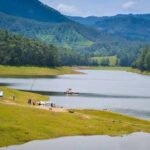
When Jharkhand’s Chief Minister Hemant Soren wanted somewhere quiet to spend an afternoon with his entire council of ministers and MLAs, he chose Latratu Dam — arriving on 27 August, boating across the reservoir for nearly two hours, and unintentionally turning a modest, still-developing dam into local headline news. Opposition MLAs soon followed suit, making Latratu one of the more unusual entries in India’s dam tourism landscape: a reservoir whose popularity has been shaped as much by political visits as by its own scenic appeal.

Latratu Dam: Overview
| Parameter | Details |
| State | Jharkhand |
| District | Khunti |
| Location | Latratu village, near Dumargari |
| Nearby access points | Bero and Lapung (Ranchi district border area) |
| Distance from Lodhma railway station | Approx. 7.91 km |
| Status | Emerging tourist attraction, under active development |
| Popular season | November to February |
| Entry ticket | Approx. Rs 20 per person |
| Parking fee | Approx. Rs 20 |
| Popular activities | Boating, picnicking, photography |
| On-site facilities | Guest house, boating service |
| Notable visitors | Jharkhand CM Hemant Soren and cabinet (2022); opposition BJP MLAs (subsequent visit) |
| Average visitor rating | Approx. 4.2–4.3 out of 5 |
| Nearby attractions | Perwaghagh Falls, Ulung Falls, Remix Falls, Dasam Falls (Khunti) |
| District development effort | Multi-crore investment by Khunti district administration to develop tourism infrastructure |
| Best time to visit | November to February |
Where Latratu Dam Sits: Khunti’s Emerging Tourism Circuit
Latratu Dam sits in Khunti district, a region in southern Jharkhand historically shaped by the Munda and Oraon tribal communities, with recorded history stretching from the Mauryan era through the Nagvanshi dynasty. Unlike Jharkhand’s larger, more established dam destinations near Ranchi city, Latratu occupies a quieter, less commercialised position — close enough to Ranchi to draw weekend visitors from Bero and Lapung, yet distinctly part of Khunti’s own developing tourism identity.
A few points about this positioning:
- The district administration officially classifies Latratu Dam and its reservoirs as an “emerging attraction,” alongside other seasonal natural sites gaining popularity specifically during the cooler November-to-February window
- Its proximity to the Ranchi-Khunti border means visitor listings sometimes describe it under Ranchi’s Bero block rather than Khunti district directly, reflecting genuine ambiguity in how the site is popularly categorised
- This overlapping regional identity hasn’t hurt the site’s visibility — if anything, it has broadened the pool of potential day-trippers who can reach it easily from either district
What’s Known (and Not Known) About the Dam’s Engineering
Unlike Jharkhand’s larger, more thoroughly documented dams such as Getalsud, Dhurwa, or Chandil, Latratu Dam’s precise engineering specifications — exact height, length, river name, and storage capacity — are not consistently published in accessible public records. This gap reflects the dam’s status as a smaller, more locally significant structure that has only recently begun attracting serious government tourism investment, rather than a major multipurpose irrigation or hydroelectric project with extensive technical documentation.
A few honest points about this data gap:
- General visitor accounts and district tourism listings describe Latratu primarily in terms of its scenic and recreational value rather than its engineering scale
- For readers specifically seeking precise height, length, and river-naming details, Jharkhand’s Water Resources Department would be the most reliable direct source, given how thin general public documentation remains for this particular site
- This kind of documentation gap is common for smaller reservoirs across India that serve primarily local or district-level purposes rather than major state or interstate water management functions
A District Investing Heavily to Turn a Dam Into a Destination
What Latratu Dam lacks in historical documentation, it is increasingly making up for in active government investment. In 2021, local reporting confirmed that Khunti’s district administration had accelerated efforts to develop the dam specifically as a centre of tourist attraction, committing a multi-crore rupee budget toward improving facilities at the site.
A few points about this development push:
- The investment reflects a broader pattern across several Indian states, where district administrations identify underused local reservoirs as low-cost, high-potential tourism assets requiring targeted infrastructure spending
- Current visitor reviews describe the site as still being “in developing phase,” with amenities like a guest house and boating service already operational, even as broader infrastructure continues to be built out
- Practical challenges remain part of the visitor experience — reviews specifically flag the road leading to the dam as rough or difficult, a common early-stage growing pain for sites still under active development
From Chief Minister to Opposition MLAs: How Latratu Became a Political Hotspot
Perhaps the most distinctive chapter in Latratu Dam’s recent history has nothing to do with irrigation or engineering at all. On 27 August, Chief Minister Hemant Soren travelled to Latratu Dam with his entire council of ministers and sitting MLAs, spending roughly two hours boating on the reservoir. This visit generated significant local media coverage, effectively introducing Latratu Dam to a much wider audience across Jharkhand.
What followed was a genuinely unusual cross-party pattern:
- Following the Chief Minister’s widely reported visit, the dam began appearing regularly in local news as a preferred leisure destination
- Opposition BJP MLAs subsequently made their own visit to Latratu Dam, reportedly drawn by the same appeal that had brought the ruling coalition’s leadership there
- This sequence of political visits — cutting across party lines — has itself become part of local media narrative around the site, distinguishing Latratu from virtually every other dam profiled for its scenic or engineering merits alone
For a site still officially described as being in a “developing phase,” this level of political attention has provided meaningful visibility that has likely accelerated both public interest and government investment in the location.
Nearby Attractions: Waterfalls and Tribal Heritage
Khunti district’s broader tourism identity centres heavily on its natural waterfalls, several of which sit within reasonable travelling distance of Latratu Dam, making it easy to combine into a fuller regional itinerary.
Notable nearby sites include:
- Perwaghagh Falls, on the Chata River in Torpa block, carrying a local legend that gives it its name — “Perwa” meaning pigeon and “Ghagh” meaning home, reflecting a belief that pigeons live inside the waterfall itself
- Ulung Falls and Remix Falls, both gaining seasonal popularity alongside Latratu during the same November-to-February window
- Dasam Falls, Khunti’s own local waterfall, distinct from the more famous Dassam Falls in neighbouring Ranchi district despite the similar name
Beyond natural attractions, Khunti district carries genuine cultural and historical weight as a heartland of Munda and Oraon tribal heritage, adding a dimension of cultural tourism potential alongside the district’s growing focus on waterfalls and reservoirs.
Planning a Visit to Latratu Dam
For anyone considering a trip:
- Getting there: The dam sits near Latratu village in Khunti district, reachable via Bero and Lapung from the Ranchi side, with the nearest railway station at Lodhma roughly 7.91 km away
- Best season: November through February offers the most comfortable weather and aligns with the district’s officially recognised peak season for this and other nearby attractions
- What to expect: Boating facilities and a guest house are available, though the site remains under active development, and the access road has been described as rough by recent visitors
- Combine with nearby waterfalls: Given Khunti’s concentration of seasonal waterfalls, pairing a Latratu Dam visit with Perwaghagh Falls or other nearby sites makes for a fuller day trip
- Budget for entry and parking: Modest fees of around Rs 20 each for entry and parking apply at the site
FAQs
Q1. Is Latratu Dam located in Khunti district or Ranchi district — sources seem to disagree?
Official Khunti district government sources list it as part of Khunti district’s tourism offerings, though its proximity to the Bero and Lapung areas of Ranchi district means some listings and visitors reach it via that route, leading to some overlap in how the location is commonly described.
Q2. Why can’t I find the height, length, or river name for Latratu Dam like I can for larger Jharkhand dams?
As a smaller, more recently promoted local reservoir rather than a major documented irrigation or hydroelectric project, Latratu Dam hasn’t received the same level of detailed public engineering documentation as larger structures like Getalsud or Chandil, so this information is best confirmed directly through Jharkhand’s Water Resources Department.
Q3. Is the road to Latratu Dam suitable for all vehicles, or should I expect difficulties getting there?
Recent visitor reviews specifically note that the final approach road to the dam can be rough, so travelling with a vehicle comfortable on uneven roads, or allowing extra time for the journey, is a sensible precaution while the site remains under development.
Q4. Why did Latratu Dam suddenly become popular with politicians from different parties?
The site gained significant visibility after Chief Minister Hemant Soren visited with his full council of ministers and MLAs for a boating outing, which was widely reported locally, and this attention appears to have subsequently drawn opposition MLAs to visit the same spot, further raising its profile across party lines.