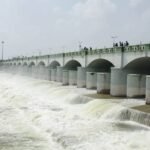
Kaliyasot Dam’s name traces back nearly a thousand years, to a minister in the court of Raja Bhoj — the 11th-century ruler credited with founding Bhopal’s famous lake system in the first place. Today, this same reservoir sits in the catchment of Van Vihar National Park, quietly linking medieval royal history, Bhopal’s chain of interconnected lakes, and modern wildlife conservation into a single site most visitors know simply as a peaceful weekend getaway.

Kaliyasot Dam: Overview
| Parameter | Details |
| State | Madhya Pradesh |
| Location | Near Chuna Bhatti village, Bhopal |
| River | Kaliyasot River, a tributary of the Betwa River |
| River length | Approx. 29 km |
| Dam type | Earthen, homogeneous |
| Height | 34.25 metres |
| Length | 1,080 metres |
| Top width | 6.30 metres |
| Full Reservoir Level (FRL) | 505.67 metres |
| Top dam level | 508.5 metres |
| Gross storage capacity | 35.387 million cubic metres |
| Live storage capacity | 34.41 million cubic metres |
| Discharge capacity | 1,355 cumecs |
| Primary purpose | Irrigation |
| Irrigated area | Approx. 10,425 hectares across Bhopal and Raisen district |
| Name origin | KalyanStrote, a minister of Raja Bhoj who developed the Upper Lake spillway |
| Fed by | Kaliyasot River, plus spillage from Bhopal’s Upper Lake via Bhadbhada Dam |
| Nearby protected area | Van Vihar National Park |
| Water quality classification | Category ‘B’ year-round |
| Popular for | Picnicking, scenic views, recreation |
| Best time to visit | October to February |
The Kaliyasot River: A Modest, Monsoon-Dependent Stream
The Kaliyasot River, which this dam impounds, is a relatively short tributary of the Betwa River, stretching approximately 29 km in total length. Its flow pattern is distinctly seasonal — the river carries very limited water outside the monsoon months, with meaningful flow occurring almost exclusively during the rainy season.
A few points about this river’s character:
- Its modest, monsoon-dependent nature means the Kaliyasot Dam’s reservoir relies heavily on both direct rainfall runoff and supplementary water from Bhopal’s broader lake system to maintain useful storage through the year
- The river’s catchment area overlaps significantly with Van Vihar National Park, giving this stretch of water genuine ecological as well as agricultural significance
- Some scattered human settlements exist within this catchment area, adding a layer of local community presence to what is otherwise a largely protected natural landscape
Where the Name Comes From: A Link to Raja Bhoj’s Court
One of the more distinctive details about Kaliyasot Dam is its name’s origin. According to historical tradition, the dam derives its name from KalyanStrote, a minister who served in the court of Raja Bhoj — the 11th-century Paramara dynasty ruler traditionally credited with founding Bhopal and developing its historic Upper Lake, one of India’s oldest and largest artificial lakes.
KalyanStrote is specifically associated with developing the Upper Lake’s spillway system, an engineering contribution significant enough that his name eventually became attached to this downstream reservoir centuries later. This naming connection ties Kaliyasot Dam directly into Bhopal’s much older royal water-management heritage, even though the modern dam structure itself is a considerably more recent addition.
A few points about this historical thread:
- Raja Bhoj’s original lake engineering work laid the foundation for Bhopal’s identity as a “City of Lakes,” a reputation the city has maintained for nearly a millennium
- The persistence of a minister’s name across roughly a thousand years of history, attached to infrastructure built centuries after his lifetime, reflects how deeply Bhopal’s water heritage runs through its place names
- This naming pattern is a reminder that Bhopal’s modern water infrastructure, including Kaliyasot, Kolar, Kerwa, and Bhadbhada dams, didn’t emerge in isolation but continues a water-management tradition stretching back to the city’s medieval founding
Fed by an Ancient Lake: The Upper Lake and Bhadbhada Connection
Kaliyasot Dam’s water supply isn’t limited to its own modest river catchment. The reservoir also receives spillage from Bhopal’s historic Upper Lake, channelled through the Bhadbhada Dam positioned upstream of Kaliyasot in the broader flow sequence.
This connection matters for a few reasons:
- It links Kaliyasot directly into Bhopal’s oldest and most significant water body, the Upper Lake, which itself traces its origins to Raja Bhoj’s original medieval engineering
- This supplementary inflow helps buffer Kaliyasot’s otherwise limited, monsoon-dependent local river flow, contributing to more reliable overall storage
- The interconnected nature of Bhopal’s dam and lake system — Upper Lake feeding into Bhadbhada, which feeds into Kaliyasot — illustrates how the city’s water security depends on a coordinated network rather than any single isolated structure
Engineering Specifications
Kaliyasot Dam is built as an earthen, homogeneous structure, standing 34.25 metres tall and stretching 1,080 metres in length, with a top width of 6.30 metres.
Core specifications:
- Height: 34.25 metres
- Length: 1,080 metres
- Top width: 6.30 metres
- Full Reservoir Level: 505.67 metres
- Top dam level: 508.5 metres
- Gross storage capacity: 35.387 million cubic metres
- Live storage capacity: 34.41 million cubic metres
- Discharge capacity: 1,355 cumecs
This homogeneous earthen construction — using a single, consistent fill material throughout the embankment rather than a composite design — reflects a straightforward, cost-effective engineering approach suited to a medium-scale irrigation project of this type.
What the Dam Irrigates and How It Fits Bhopal’s Water Network
Kaliyasot Dam’s primary purpose has remained irrigation since its construction, supporting agricultural land across both Bhopal and neighbouring Raisen district:
- Irrigation coverage: approximately 10,425 hectares of agricultural land
- Water quality: consistently rated Category ‘B’ throughout the year according to pollution board studies, indicating reasonably good water quality suitable for its intended uses
- Position in Bhopal’s broader water system: alongside Kolar Dam (the city’s largest single drinking water source), Kerwa Dam, and Bhadbhada Dam, Kaliyasot forms part of an interconnected network managing Bhopal’s water needs across irrigation, drinking supply, and flood management
Understanding Kaliyasot’s role within this broader network helps explain why Bhopal’s water security decisions often involve coordinated management across multiple dams simultaneously — decisions about Bhadbhada’s sluice gates, for instance, directly affect how much water reaches Kaliyasot downstream.
A Recreational Escape Near Van Vihar
Beyond its agricultural function, Kaliyasot Dam has become a genuinely popular recreational spot for Bhopal residents, valued precisely because of its location away from the dense, urbanised parts of the city, surrounded instead by hills and woods.
A few points about this recreational appeal:
- The dam’s proximity to Van Vihar National Park gives visitors the option to combine a scenic reservoir visit with wildlife viewing at one of India’s more accessible urban national parks
- The surrounding hilly, forested landscape offers a genuine change of pace from central Bhopal’s busier commercial areas
- This combination of natural scenery and relative accessibility has made Kaliyasot a consistent choice for short getaways among Bhopal residents
Planning a Visit to Kaliyasot Dam
For anyone considering a trip:
- Getting there: The dam sits near Chuna Bhatti village, within reasonable driving distance of central Bhopal
- Best season: October through February offers the most comfortable weather, though the monsoon months bring the fullest reservoir given the Kaliyasot River’s seasonal flow pattern
- Combine with Van Vihar National Park: Given the dam’s proximity to this popular park, visitors can easily combine both destinations into a single day trip
- What to expect: A relatively quiet, scenic setting suited to casual sightseeing and photography rather than extensive recreational infrastructure
FAQs
Q1. Why is Kaliyasot Dam named after a historical minister rather than a modern engineer or official?
The dam’s name traces back to KalyanStrote, a minister in Raja Bhoj’s 11th-century court who developed the spillway for Bhopal’s historic Upper Lake, reflecting how deeply the city’s water infrastructure naming traditions connect to its medieval royal founding history.
Q2. Does Kaliyasot Dam rely entirely on its own river, or does it get water from elsewhere?
It receives water from both its own modest, monsoon-dependent Kaliyasot River catchment and supplementary spillage from Bhopal’s historic Upper Lake, channelled through the upstream Bhadbhada Dam.
Q3. Can I visit both Kaliyasot Dam and Van Vihar National Park in a single trip?
Yes — given their close proximity, many visitors combine a scenic visit to the dam with a wildlife viewing trip to Van Vihar National Park as part of the same outing.
Q4. Is Kaliyasot Dam’s water quality safe for its stated irrigation and recreational purposes?
Pollution board studies have consistently rated the dam’s water quality as Category ‘B’ throughout the year, indicating reasonably good conditions suitable for its irrigation function, though visitors should follow any posted local guidelines regarding direct contact with the water.