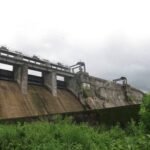
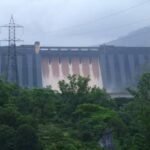
Visitors driving to Channapatna for its famous lacquered wooden toys rarely realise that just outside town sits a nearly 80-year-old irrigation reservoir that has quietly shaped the region’s agricultural economy for generations. Kanva Dam doesn’t compete for attention with Karnataka’s larger, more celebrated dams, but its role in transforming a semi-arid stretch of Ramanagara district into productive farmland — and its unusual fisheries training programme aimed at local economic independence — make it worth knowing well beyond its modest scale.
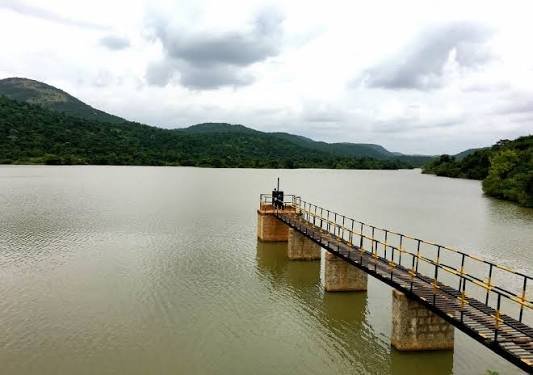
Kanva Dam: Overview
| Parameter | Details |
| State | Karnataka |
| District | Ramanagara |
| Location | Channapatna |
| Distance from Bengaluru | Approx. 69 km |
| River | Kanva River |
| Dam type | Masonry check dam |
| Year built | 1946 |
| Built under | Mysore State Irrigation Department, technically advised by Sir M. Visvesvaraya |
| Original project cost | Approx. ₹40 lakh |
| Irrigation coverage | Approx. 2,100 hectares (1,400 ha right bank, 700 ha left bank) |
| Primary crops supported | Ragi, coconut, vegetables |
| Nearby facility | Fisheries training and research centre |
| Purpose | Irrigation and drinking water for the semi-arid Ramanagara region |
| Nearby town identity | Channapatna, famous for traditional wooden toys |
| Status | Artificial lake and local tourist attraction |
| Best time to visit | October to February |
The Kanva River and Ramanagara’s Semi-Arid Challenge
Kanva Dam is built across the Kanva River, a relatively modest waterway within the broader river network of Ramanagara district, an area historically classified as semi-arid and heavily dependent on reliable water storage infrastructure for both farming and drinking water. Unlike districts fed by larger perennial rivers, this part of Karnataka has long relied on smaller, purpose-built check dams and tanks to buffer against unpredictable rainfall.
A few points about this setting:
- Ramanagara district sits within the broader Deccan plateau region of southern Karnataka, an area where reliable water storage has always been essential to agricultural stability rather than optional infrastructure
- The Kanva River’s modest scale meant that a masonry check dam, rather than a massive gravity structure, was considered sufficient to meet the region’s irrigation and drinking water needs
- This approach reflects a broader pattern across mid-20th-century Mysore State water planning, where numerous smaller, locally significant dams were built to serve specific district-level agricultural needs rather than large multi-district command areas
History: Built Under Visvesvaraya’s Technical Guidance
Kanva Dam’s construction dates to 1946, undertaken by the Mysore State Irrigation Department under the technical advisement of Sir M. Visvesvaraya — the celebrated engineer whose influence touched numerous major Karnataka water projects during this era, from the much larger Krishna Raja Sagara Dam to smaller regional projects like this one.
A few historical points worth noting:
- The project’s original outlay of approximately ₹40 lakh covered not just the dam structure itself but also the associated canal network needed to actually deliver irrigation water to surrounding farmland
- This canal system was specifically designed to irrigate roughly 2,100 hectares, split between 1,400 hectares on the right bank and 700 hectares on the left bank
- The dam’s construction in 1946, just a year before Indian independence, places it among the final major water infrastructure projects undertaken under princely Mysore State administration before the broader reorganisation of Indian states in subsequent decades
This strategic infrastructure had an immediate and lasting effect on local agriculture, particularly benefiting the cultivation of ragi (finger millet), coconut, and vegetable crops — all of which remain central to Ramanagara’s agrarian economy to this day, nearly eight decades after the dam’s completion.
What’s Known About the Engineering
Precise, consistently published engineering specifications for Kanva Dam — exact height and length figures — are not extensively documented in accessible public records, a common pattern for smaller, locally significant check dams built during this era compared to the more thoroughly studied major dams of the same period.
What is clearly established:
- The dam is constructed as a masonry check dam, a design suited to smaller rivers requiring water diversion and storage rather than the massive impoundment capacity of larger gravity structures
- Its associated canal network extends across both banks of the Kanva River, distributing water to the surrounding command area
- For readers specifically seeking precise height and length figures, Karnataka’s Water Resources Department would be the most reliable direct source, given the gaps in general public documentation for this particular structure
Beyond Irrigation: A Fisheries Training Centre for Local Livelihoods
One of the more distinctive features of Kanva Dam is a fisheries training and research centre established near the reservoir, specifically designed to train local residents in fish farming techniques as a pathway toward economic independence. This facility represents a deliberate secondary economic use of the reservoir, extending its benefit to the community well beyond straightforward irrigation and drinking water supply.
A few points about this initiative:
- The centre reflects a broader philosophy, common to several mid-20th-century Indian irrigation projects, of using reservoir infrastructure to support diversified local livelihoods rather than agriculture alone
- Training local residents in fish farming has allowed communities around the reservoir to develop an additional, more self-sufficient income stream connected directly to the dam’s presence
- This combination of irrigation infrastructure and deliberate livelihood training gives Kanva Dam a social development dimension not always present at comparably sized Indian dams
Kanva Reservoir and Channapatna’s Famous Wooden Toys
Kanva Dam’s location adjacent to Channapatna adds a distinctive cultural dimension to any visit. Channapatna is renowned across India and internationally for its traditional lacquered wooden toys, a craft tradition recognised with a Geographical Indication tag and dating back generations, historically supported by the region’s teak and ivory-wood forests along with locally developed lacquering techniques.
This proximity means:
- Visitors travelling to see Channapatna’s toy workshops and markets can easily combine their trip with a visit to the nearby Kanva Reservoir, creating a fuller day exploring both craft heritage and scenic water infrastructure
- The reservoir has developed its own modest tourism identity as an artificial lake, drawing visitors interested in a quieter, less crowded alternative to Karnataka’s larger and more heavily promoted dam destinations
- This pairing of a functioning irrigation reservoir with a globally recognised craft town gives the broader Channapatna area a genuinely well-rounded appeal for travellers interested in both engineering heritage and traditional Indian craftsmanship
Planning a Visit to Kanva Dam
For anyone considering a trip:
- Getting there: The reservoir sits near Channapatna, roughly 69 km from Bengaluru, making it an easy day trip along the Bengaluru-Mysuru corridor
- Best season: October through February offers the most comfortable weather for visiting the reservoir and exploring the surrounding area
- Combine with Channapatna’s toy workshops: Given the short distance, pairing a Kanva Dam visit with a stop at Channapatna’s wooden toy markets and workshops makes for a well-rounded day trip
- What to expect: A quieter, less developed reservoir setting compared to Karnataka’s larger dam destinations, appealing to visitors seeking a relaxed scenic stop rather than extensive tourist infrastructure
FAQs
Q1. Is Kanva Dam built on the Kaveri River or a separate, smaller river?
It is built across the Kanva River, a local waterway distinct from the larger Kaveri River that also flows through parts of the same general Ramanagara-Kanakapura region, and the two should not be confused despite occasional inconsistencies in some online references.
Q2. Why can’t I find detailed height and length specifications for Kanva Dam?
As a smaller, locally significant masonry check dam built primarily to serve district-level irrigation needs rather than as a major state infrastructure project, Kanva Dam hasn’t received the same extent of detailed public engineering documentation as larger Karnataka dams, so precise figures are best confirmed through the state’s Water Resources Department.
Q3. Can visitors actually learn about or participate in the fisheries training programme near Kanva Dam?
The training centre was established primarily to benefit local residents seeking fish farming livelihoods, so general visitors interested in learning more should inquire directly with the facility rather than expecting standard tourist programming.
Q4. Is it worth visiting Kanva Dam if my main interest is Channapatna’s wooden toys rather than dams specifically?
Yes — given the short distance between the two, many visitors combine a Channapatna toy shopping trip with a scenic stop at Kanva Reservoir, making it a natural addition rather than requiring a separate dedicated journey.