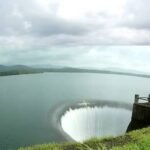
Long before Baglihar Dam became the subject of India-Pakistan arbitration, Salal Dam had already set the precedent — becoming the very first hydropower project India built in Jammu and Kashmir under the Indus Waters Treaty framework, and the first genuine test case for how that treaty’s constraints would actually play out in practice. The result was a set of significant design concessions that still shape how the dam operates today, nearly four decades after its completion.
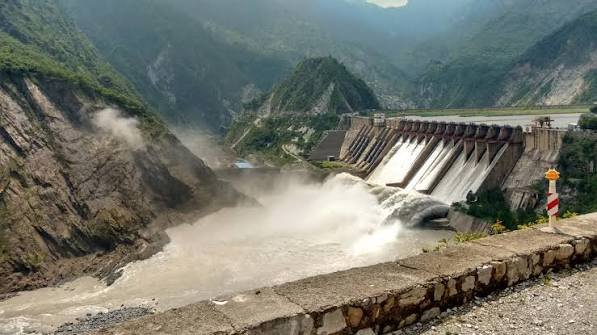
Salal Dam: Overview
| Parameter | Details |
| Union Territory | Jammu and Kashmir |
| District | Reasi |
| Location | Near Salal village |
| River | Chenab River — one of the three “Western Rivers” under the Indus Waters Treaty |
| Dam type | Gravity dam, run-of-the-river |
| Height | 113 metres (370.7 ft) |
| Length | 487 metres (1,597.8 ft) |
| Project first conceived | 1920 |
| Feasibility studies began | 1961 |
| Construction began | 1970 |
| Year completed | 1987 |
| Construction cost | Approx. ₹928.89 crore |
| Significance | First hydropower project built by India in J&K under the Indus Waters Treaty regime |
| Key design concessions (1978) | Reduced height, eliminated operating pool, permanently sealed sediment sluices |
| Reservoir | Salal Lake |
| Reservoir total capacity | 280.86 million cubic metres |
| Reservoir active capacity | Just 12 million cubic metres |
| Spillway | 12 gates, Ogee type |
| Power station | Two stages (1987 and 1995) |
| Installed power capacity | 690 MW (2 x 345 MW) |
| Operator | NHPC |
| Nearby landmark | Chenab Railway Bridge, the world’s highest railway arch bridge |
| Best time to visit | October to February |
The Chenab River and India’s First Test Case Under the Indus Waters Treaty
Salal Dam sits across the Chenab River near Salal village in Reasi district, on one of the three “Western Rivers” — alongside the Indus and Jhelum — allocated primarily to Pakistan under the 1960 Indus Waters Treaty, with India permitted specific non-consumptive uses such as hydroelectric power generation, subject to design constraints intended to prevent India from meaningfully controlling water flow to Pakistan’s disadvantage.
Salal holds particular historical significance within this framework as the very first hydropower project India actually built in Jammu and Kashmir under this treaty regime, making it the original real-world test of how these treaty constraints would function once an actual project moved from paper to construction.
A few points about this positioning:
- The Chenab’s seasonal flow pattern is genuinely variable, with winter freezing in the upper Himalayan ridges reducing water levels, while summer snowmelt from Kishtwar and Himachal Pradesh significantly increases flow
- This variability shapes how the dam’s run-of-the-river design needs to operate, since it cannot rely on large-scale storage to smooth out these seasonal fluctuations
- As the first project of its kind, Salal’s construction and subsequent dispute resolution directly shaped the precedent and negotiating patterns later applied to Baglihar Dam, built further downstream on the same river decades afterward
History: From a 1920s Idea to a 1987 Completion
Salal Dam’s origins trace back remarkably far — the project was first conceived as early as 1920, decades before India’s independence. Formal feasibility studies began in 1961, undertaken by the Government of Jammu and Kashmir, with a complete project design ready by 1968.
Construction finally began in 1970, undertaken by the Central Hydroelectric Project Control Board under the Government of India’s Ministry of Irrigation and Power. A few historical points worth noting:
- Under the terms of the Indus Waters Treaty, India submitted its plan for the project to the Permanent Indus Commission for approval in 1968, as required by the treaty’s dispute-resolution and notification procedures
- Pakistan formally objected to the project in 1974, arguing that the dam’s construction did not comply with the terms of the treaty
- This objection led to prolonged bilateral negotiations between the two countries throughout the mid-to-late 1970s
- The dam was ultimately completed in 1987, nearly two decades after construction began, reflecting the extended timeline required to resolve the underlying treaty dispute
The 1978 Concessions: What India Gave Up
The resolution of Pakistan’s 1974 objections came through a bilateral agreement reached in 1978, and it involved genuinely significant concessions on India’s part regarding the dam’s design. These changes were substantial enough to materially affect the dam’s long-term operational capacity:
- Reduced height: the dam’s height was lowered from its originally proposed design specifications
- Eliminated operating pool: India agreed to remove the “working pool” — the portion of reservoir storage that would have allowed for active, flexible water-level management
- Permanently sealed sediment sluices: the under-sluices originally designed for sediment management were permanently plugged, closing off a mechanism that would have helped manage silt accumulation in the reservoir over time
These concessions are directly reflected in the dam’s current operating statistics: while Salal Lake holds a total reservoir capacity of 280.86 million cubic metres, its active, usable capacity is a mere 12 million cubic metres — a strikingly small fraction of the total, illustrating just how significantly the 1978 agreement constrained the dam’s practical storage flexibility.
This resolution was described at the time by observers on both sides as a successful example of diplomatic water-sharing negotiation, and it was broadly welcomed by both countries. It’s worth noting, however, that later disputes over subsequent Chenab basin projects, including Baglihar Dam, would follow a different resolution path — involving a formal neutral expert process rather than a purely bilateral negotiated settlement — suggesting the two countries’ approaches to resolving similar disputes evolved considerably over the following decades.
Engineering Specifications
Salal Dam is built as a gravity structure, standing 113 metres (370.7 ft) tall and stretching 487 metres (1,597.8 ft) in length, with a total dam volume of 1.45 million cubic metres.
Core specifications:
- Height: 113 metres (370.7 ft)
- Length: 487 metres (1,597.8 ft)
- Dam volume: 1.45 million cubic metres
- Spillway: 12 gates, Ogee type, discharge capacity 22,427 cubic metres per second
- Reservoir total capacity: 280.86 million cubic metres
- Reservoir active capacity: just 12 million cubic metres, reflecting the 1978 design concessions
This combination of a substantial total reservoir volume alongside an unusually small active capacity is a direct engineering signature of the treaty-driven design constraints applied to this project.
Power Generation Today
Salal Dam’s power station was developed in two distinct stages, reflecting its extended construction and expansion timeline. Stage I, commissioned in 1987 alongside the dam’s completion, added 345 MW through three 115 MW Francis-type turbines. Stage II followed in 1995, adding a further 345 MW through an identical set of turbines, bringing the total installed capacity to 690 MW.
Key power generation details:
- Total installed capacity: 690 MW (2 x 345 MW)
- Hydraulic head: 94.5 metres
- Annual generation: approximately 3,082 million kWh
- Operator: NHPC (National Hydroelectric Power Corporation)
This substantial generation capacity makes Salal one of the more significant hydroelectric contributors to Jammu and Kashmir’s power supply, despite the operational constraints imposed by its limited active reservoir storage.
Visiting: The World’s Highest Railway Bridge Nearby
Reasi, the district where Salal Dam sits, has become known internationally in recent years for an entirely separate engineering landmark: the Chenab Railway Bridge, which at 359 metres stands taller than the Eiffel Tower and holds the distinction of being the world’s highest railway arch bridge, built by Konkan Railways.
A few points about this nearby attraction:
- Reasi has earned the nickname “Gateway of Chenab Railway Bridge” specifically because of this landmark structure’s proximity
- Combining a Salal Dam visit with viewing the Chenab Bridge offers visitors a genuinely striking pairing of two very different eras and types of engineering achievement on the same river
- The Siar Baba Waterfall, located on the Chenab in nearby Kotla village, offers an additional natural attraction for visitors exploring this stretch of Reasi district
Planning a Visit to Salal Dam
For anyone considering a trip:
- Getting there: The dam sits near Salal village in Reasi district, accessible by road
- Best season: October through February offers the most comfortable weather for visiting this Jammu and Kashmir region
- Security considerations: As a strategically significant hydroelectric facility, visitor access to the dam site itself may be restricted, so checking current guidelines before planning a visit is advisable
- Combine with regional landmarks: Given Reasi’s proximity to the Chenab Railway Bridge and Siar Baba Waterfall, a broader regional itinerary covering multiple engineering and natural attractions is well worth planning
FAQs
Q1. Why does Salal Dam have such a small active reservoir capacity compared to its total capacity?
This reflects design concessions India agreed to in a 1978 bilateral resolution with Pakistan following objections to the dam’s original design, which included eliminating the operating pool and permanently sealing the sediment management sluices, dramatically limiting the dam’s practical, usable storage capacity.
Q2. How is Salal Dam connected to the later Baglihar Dam dispute?
Salal was the first hydropower project India built in Jammu and Kashmir under the Indus Waters Treaty, establishing an early precedent for negotiating design disputes with Pakistan, though the later Baglihar dispute was ultimately resolved through a different, more formal neutral expert process rather than the purely bilateral negotiation used for Salal.
Q3. Can visitors get close to Salal Dam, or is access restricted given its strategic importance?
As a significant hydroelectric facility in Jammu and Kashmir, general visitor access to the dam site itself may be limited, so checking current security guidelines through local authorities before planning a close visit is a sensible precaution.
Q4. Is the nearby Chenab Railway Bridge actually connected to or built by the same authority as Salal Dam?
No — they are entirely separate engineering projects built decades apart, with Salal Dam developed for hydroelectric power under the Ministry of Irrigation and Power and later NHPC, while the Chenab Railway Bridge was a much more recent infrastructure project built by Konkan Railways, though both happen to be located on the same river within Reasi district.