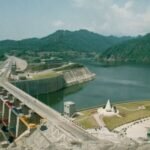
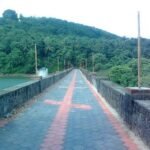
Most old Indian dams that predate modern cement relied on surki mortar or lime plaster to bind their stonework — Pothundi Dam took a genuinely unusual approach, building its core wall from a mixture of jaggery and quick lime. This makes it one of only two dams in Asia known to have been built entirely without cement, a distinction that places this 19th-century Palakkad structure among the more remarkable examples of traditional Indian hydraulic engineering still in active use today.
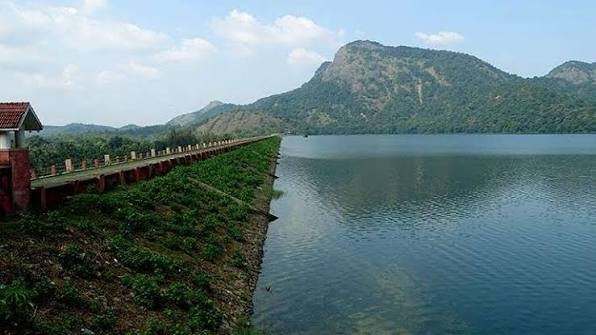
Pothundi Dam: Overview
| Parameter | Details |
| State | Kerala |
| District | Palakkad |
| Location | Pothundi village, backdrop of Nelliyampathi hills |
| Rivers | Meenichiladipuzha and Padipuzha, tributaries of the Aylampuzha river |
| Position relative to confluence | Approx. 400 metres upstream |
| Dam type | Earth-filled dam |
| Core wall material | Jaggery and quick lime (no cement) |
| Original construction | 19th century — one of the oldest dams in India |
| Irrigation scheme completed | 1971, at a cost of Rs 23.425 million |
| Height | 32.61 metres (107 ft) |
| Length | 1,680 metres (5,510 ft) |
| Reservoir total capacity | 50.914 million cubic metres |
| Reservoir active capacity | 43.9 million cubic metres |
| Reservoir surface area | 2.75 sq. km |
| Catchment area | 31 sq. km, thickly forested with teak |
| Right bank canal | 10 km |
| Left bank canal | 8 km |
| Irrigation coverage | 5,465–5,470 hectares in Chittur and Alathur taluks |
| Drinking water supplied to | Nemmara, Ayalur, Melarcode panchayats |
| Notable local festival | Nemmara Vallengi Vela Festival |
| Best time to visit | October to February |
Where Two Rivers Meet: The Meenichiladipuzha and Padipuzha
Pothundi Dam sits across not one but two rivers — the Meenichiladipuzha and the Padipuzha, both tributaries of the Aylampuzha river — built at a point roughly 400 metres upstream of where these two streams converge. This confluence positioning, set against the scenic backdrop of the Nelliyampathi hills, gives the dam a genuinely favourable catchment for capturing monsoon flow from two separate but nearby watercourses simultaneously.
A few points about this setting:
- The dam’s catchment area of 31 sq. km remains thickly forested with teak wood trees, giving the reservoir a genuinely pristine, densely wooded character
- This teak forest catchment likely also contributes to relatively stable water quality reaching the reservoir, given the reduced agricultural or urban runoff typical of such forested upland terrain
- The Nelliyampathi hills backdrop places Pothundi within one of Palakkad district’s most scenic Western Ghats-adjacent landscapes, an area also known more broadly for its hill station tourism appeal
A 19th-Century Dam, Modernised a Century Later
Pothundi Dam’s origins trace back to the 19th century, making it, alongside a small handful of other Indian dams, genuinely one of the oldest still-functioning water structures in the country. However, the dam’s role as a formal, comprehensive irrigation project only fully materialised much later, when the irrigation scheme component was completed in 1971 at a cost of Rs 23.425 million.
A few historical points worth noting:
- This nearly century-long gap between the original 19th-century dam construction and its 1971 irrigation-scheme completion reflects a pattern also seen at other older Kerala water structures, where colonial-era or pre-modern dams were substantially expanded and formalised under post-independence state planning
- The 1971 project specifically added the canal infrastructure needed to deliver the reservoir’s water systematically to surrounding farmland, transforming what had been a more localised structure into a genuine medium irrigation project
- This phased development timeline places Pothundi’s modernisation roughly contemporaneous with several other Palakkad district irrigation projects developed during the same era, including nearby Malampuzha and Walayar dams
The Jaggery-and-Lime Core: A Traditional Engineering Marvel
The single most distinctive feature of Pothundi Dam is its construction technique. Rather than using a concrete core wall — standard practice for embankment dams both then and now — engineers built Pothundi’s core using a mixture of jaggery (unrefined cane sugar) and quick lime, entirely omitting cement from the structure’s foundational sealing layer.
A few points about this unusual material choice:
- This makes Pothundi the second dam in Asia known to have been constructed without any cement mixture, a genuinely rare engineering distinction
- Jaggery-lime mortar, while unusual by modern standards, was a documented traditional Indian building technique, valued historically for its binding properties and durability when properly prepared and applied
- The fact that this core wall has continued functioning effectively for well over a century, supporting a dam that remains fully operational today, speaks to the genuine structural soundness of this traditional construction method, even by the standards of modern engineering scrutiny
This detail alone places Pothundi in a genuinely distinctive category among India’s older dams, offering a tangible link to pre-industrial construction techniques that have largely been abandoned in modern dam engineering.
Engineering Specifications
Pothundi Dam is built as an earth-filled structure, standing 32.61 metres (107 ft) tall and stretching 1,680 metres (5,510 ft) in length.
Core specifications:
- Height: 32.61 metres (107 ft)
- Length: 1,680 metres (5,510 ft)
- Reservoir total capacity: 50.914 million cubic metres
- Reservoir active capacity: 43.9 million cubic metres
- Reservoir surface area: 2.75 sq. km
- Catchment area: 31 sq. km
A dedicated spillway section routes the reservoir’s designed flood discharge, working alongside the dam’s earthen embankment and its unusual jaggery-lime core wall to manage water levels safely through the monsoon season.
What the Dam Irrigates and Supplies Today
Pothundi Dam’s core mission remains irrigation, delivered through two dedicated canal systems completed as part of the 1971 modernisation project:
- Right bank canal: 10 km in length
- Left bank canal: 8 km in length
- Total irrigation coverage: 5,465 to 5,470 hectares across the Chittur and Alathur taluks
Given the favourable soil conditions in this stretch of the Palghat plains, the irrigation practice supported by Pothundi’s water is specifically a rice-based cultivation system, reflecting the broader agricultural character of this part of Palakkad district. Beyond irrigation, the dam also supplies drinking water to the Nemmara, Ayalur, and Melarcode panchayats.
A Festival on the Shores and a Thriving Fishery
Beyond its engineering and agricultural significance, Pothundi’s reservoir has developed genuine cultural and economic dimensions of its own. The reservoir hosts the Nemmara Vallengi Vela Festival, a popular local celebration held on its shores, drawing visitors and participants for this culturally significant event.
Separately, the reservoir has also been developed as a genuinely important inland fisheries project, providing an additional economic function beyond irrigation and drinking water supply — a pattern seen at several other Kerala reservoirs where fish farming has become a meaningful secondary use of otherwise purely agricultural water infrastructure.
Planning a Visit to Pothundi Dam
For anyone considering a trip:
- Getting there: The dam sits near Pothundi village, close to the Nelliyampathi hills, accessible by road within Palakkad district
- Best season: October through February offers the most comfortable weather and typically the fullest reservoir following the monsoon
- What to see: Beyond the dam’s engineering history, the surrounding teak forest and Nelliyampathi hills backdrop offer genuinely scenic views
- Time it with the festival: Visitors interested in local culture may want to check the dates of the Nemmara Vallengi Vela Festival, held on the reservoir’s shores, to combine sightseeing with this cultural event
FAQs
Q1. Is it true that Pothundi Dam was built without using any cement?
Yes — its core wall was constructed using a mixture of jaggery and quick lime instead of a cement mixture, making it one of only two dams in Asia known to have been built entirely without cement in this critical structural component.
Q2. How old is Pothundi Dam compared to other well-known Indian dams?
Its original construction dates to the 19th century, making it genuinely one of the oldest dams still operating in India, predating many of the country’s more famous post-independence irrigation projects by several decades.
Q3. Why did it take until 1971 for Pothundi Dam to become a fully developed irrigation project despite being built in the 19th century?
The original 19th-century structure served a more limited purpose, and it wasn’t until the 1971 irrigation scheme was completed, adding dedicated canal infrastructure, that the dam’s water could be systematically delivered to the surrounding 5,465-hectare command area.
Q4. Can visitors fish at Pothundi Dam, given its status as an inland fisheries project?
The reservoir has been developed as an important inland fisheries site, though visitors interested in fishing should check current local regulations and permissions with the relevant Kerala fisheries or irrigation authorities before planning an activity there.