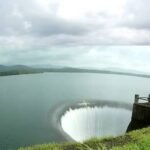
When Prime Minister Jawaharlal Nehru personally inaugurated Sathanur Dam on 14 October 1958, the project had already been shaped by one of India’s most celebrated irrigation engineers, Dr. K.L. Rao, who would later go on to serve as the country’s own Minister of Irrigation and Power. Today, most visitors to this Tiruvannamalai district landmark come not for its engineering pedigree but for something else entirely — one of India’s largest crocodile farms, home to over 200 reptiles across three distinct species.
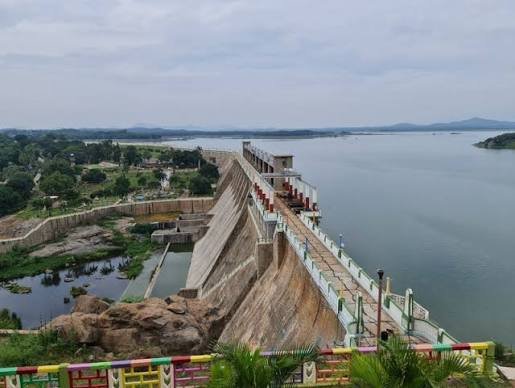
Sathanur Dam: Overview
| Parameter | Details |
| State | Tamil Nadu |
| District | Tiruvannamalai |
| Location | Sathanur, Thandarampet taluk, among the Chennakesava Hills |
| Distance from Tiruvannamalai city | Approx. 30 km |
| Official name | Lower Sathanur Dam Project |
| River | Thenpennai River (also called Ponnaiyar or South Pennar) |
| Dam type | Gravity dam with saddle dam |
| Designed by | Dr. K.L. Rao, engineer and later Minister of Irrigation and Power |
| Construction began | 1953 (First Five Year Plan) |
| Completed/operational | 1958 (Second Five Year Plan) |
| Inaugurated by | PM Jawaharlal Nehru, 14 October 1958 |
| Construction cost | Rs 3.59 crore |
| Height | 36 metres (119 ft) |
| Length | Approx. 329 metres (main dam); approx. 4,500.59 metres including saddle dam sections |
| Spillway | 122 gates, Ogee type |
| Reservoir total capacity | 229.4 MCM (8.10 TMC ft) |
| Catchment area | 7,300.43 sq. km |
| National ranking | Third-largest dam in Tamil Nadu, after Mettur and Bhavanisagar |
| Notable attraction | Crocodile farm, established 1977, over 200 crocodiles |
| Recent event | Cyclone Fengal (2024) pushed reservoir to 95% capacity |
| Best time to visit | October to February |
The Thenpennai River: A Second-Longest River With a Pollution Problem
Sathanur Dam is built across the Thenpennai River, also widely known as the Ponnaiyar or South Pennar (Dakshina Pinakini in Kannada). This river ranks as Tamil Nadu’s second-longest, after the Kaveri, stretching approximately 497 to 500 km from its origin at Nandi Hills in Karnataka’s Chikkaballapura district down to its mouth at the Bay of Bengal near Cuddalore.
A few points about this river’s broader character:
- The river flows through both Karnataka and Tamil Nadu, passing significant industrial settlements including Chandapura, Anekal, Hosur, Bagalur, and Chengam
- It has become severely polluted by industrial waste as it flows through Bangalore’s eastern industrial suburbs and the industrial parks of Hosur and Chengam, a genuine environmental concern affecting the river’s quality well before it reaches Sathanur Dam’s reservoir
- This pollution burden reflects a broader pattern seen across several Indian rivers passing through rapidly industrialising urban peripheries, where downstream water infrastructure inherits water quality challenges originating far upstream
History: Designed by K.L. Rao, Inaugurated by Nehru
Sathanur Dam’s origins trace to India’s First Five Year Plan, with the project formally proposed and construction beginning in 1953. Work continued into the Second Five Year Plan period, with the dam becoming operational in 1958.
A few historical points worth noting:
- The dam was designed by Dr. K.L. Rao, an engineer whose later career saw him serve as India’s Minister of Irrigation and Power, giving this project a direct personal connection to one of the country’s most influential water infrastructure policymakers
- The completed dam was formally inaugurated by Prime Minister Jawaharlal Nehru on 14 October 1958, with Tamil Nadu’s Chief Minister K. Kamaraj also involved in the project’s development
- Total construction cost came to Rs 3.59 crore, a modest figure reflecting both the era’s economics and the project’s relatively efficient execution within the Second Five Year Plan timeline
This combination of a nationally significant engineer and a Prime Ministerial inauguration places Sathanur Dam among a select group of Indian dams with direct, well-documented connections to the country’s earliest post-independence development planning.
Engineering Specifications: Main Dam and Saddle Dam
Sathanur Dam’s structure combines a main gravity dam with an additional saddle dam section, a common engineering approach used to seal off lower points along a reservoir’s rim that the primary dam structure alone wouldn’t cover.
Core specifications:
- Height: 36 metres (119 ft)
- Main dam length: approximately 329 metres
- Total length including saddle dam: approximately 4,500.59 metres (14,766 ft)
- Spillway: 122 gates, Ogee type, with a discharge capacity of 9,061 cubic metres per second
- Reservoir total capacity: 229.4 MCM (8.10 TMC ft)
- Catchment area: 7,300.43 sq. km
This substantial 122-gate spillway reflects the scale of flood management required given the dam’s large catchment area, capturing runoff from a significant stretch of the Thenpennai basin as it descends from Karnataka’s plateau into the Tamil Nadu plains.
One of India’s Largest Crocodile Farms
Beyond its engineering and historical significance, Sathanur Dam has become genuinely notable for a facility with nothing to do with irrigation at all. In 1977, the Tamil Nadu Forest Department established a crocodile farm at the site, which has since grown into one of India’s largest such facilities.
A few points about this conservation attraction:
- The farm currently houses over 200 crocodiles across multiple species, including mugger crocodiles, gharials, and saltwater crocodiles
- A dedicated museum on-site displays crocodile skeletons, skins, and eggs, alongside educational information on their biology and conservation status
- This combination of a working conservation and breeding facility with public educational infrastructure gives Sathanur Dam a genuinely distinctive identity compared to most Indian dam destinations, positioning it as much as a wildlife education site as a scenic reservoir
Alongside the crocodile farm, the site also features a fish grotto and maintained parks that have historically been used as filming locations by the Tamil film industry, adding a further layer of popular cultural recognition to the destination.
Tamil Nadu’s Third-Largest Dam and a Recent Cyclone Test
Sathanur Dam and its reservoir rank as the third-largest in Tamil Nadu, trailing only Mettur and Bhavanisagar dams in overall scale — placing it firmly among the state’s most significant water infrastructure assets.
The dam’s genuine operational significance was demonstrated recently when Cyclone Fengal brought unprecedented rainfall to the Pennaiyar river basin in late 2024. This resulted in heavy inflows reaching Sathanur Dam, which was already sitting at 95% capacity at the time — a genuine stress test for the reservoir’s flood management capabilities and a reminder of how directly this decades-old structure continues to matter for real-time regional water and flood management, well beyond its historical significance.
Planning a Visit to Sathanur Dam
For anyone considering a trip:
- Getting there: The dam sits roughly 30 km from Tiruvannamalai city, accessible by road
- Best season: October through February offers the most comfortable weather and typically a well-filled reservoir following the monsoon
- What to see: The crocodile farm and museum are a major draw, alongside the fish grotto and maintained parks around the reservoir
- Combine with Tiruvannamalai: Given the proximity, many visitors combine a Sathanur Dam trip with Tiruvannamalai’s significant temple heritage, including the well-known Arunachaleswarar Temple
FAQs
Q1. Is the crocodile farm at Sathanur Dam safe to visit with children?
Yes — it’s a managed conservation and educational facility run by the Tamil Nadu Forest Department, with viewing areas designed for public visits, though as with any wildlife facility, following posted safety guidelines and staying within designated viewing zones is advisable.
Q2. Why does Sathanur Dam’s length vary so much between different sources — sometimes 329 metres, sometimes over 4,500 metres?
This reflects the difference between the main gravity dam section, which measures approximately 329 metres, and the total structure length including the additional saddle dam built to seal lower points along the reservoir’s rim, which brings the combined figure to roughly 4,500 metres.
Q3. Is the water in the Thenpennai River safe given its documented industrial pollution upstream?
The river does carry a documented pollution burden from industrial areas near Bangalore and Hosur before reaching Sathanur Dam’s reservoir, so while the dam itself manages this water for irrigation and other regulated purposes, visitors and communities relying on it should stay informed through local water quality reports rather than assuming pristine conditions.
Q4. How did Sathanur Dam perform during the 2024 Cyclone Fengal rainfall event?
The dam received heavy inflows that pushed it to 95% capacity during the cyclone, demonstrating its continued active role in regional flood management even decades after its original 1958 construction, though specific details of how authorities managed the resulting water levels would be best confirmed through contemporary regional news coverage.