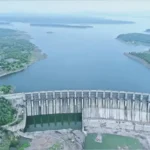
Only three barrages on Earth stretch longer than Indrapuri, and fittingly, the same construction company responsible for the world’s longest — the Farakka Barrage — also built this one. But Indrapuri’s real story predates its 1968 completion by nearly a century: it replaced a Victorian-era anicut built in 1873-74, one of the oldest irrigation systems in India, whose canal network a British administrator once called “easily the largest canal system in Bihar.”
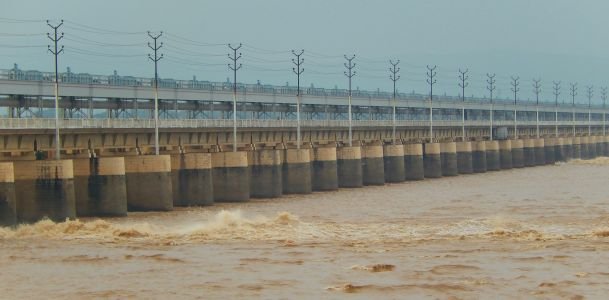
Indrapuri Dam: Overview
| Parameter | Details |
| State | Bihar |
| District | Rohtas |
| Location | Indrapuri |
| Distance from Dehri-on-Sone | Approx. 10 km |
| Distance from Aurangabad (Bihar) | Approx. 15 km |
| Official name | Indrapuri Barrage (also called Sone Barrage or Indrapuri Dam) |
| River | Son (Sone) River, a major tributary of the Ganga |
| Length | 1,407 metres (4,616 ft) — 4th longest barrage in the world |
| Built by | Hindustan Construction Company (HCC) |
| Construction began | 1960 |
| Commissioned | 1968 |
| Predecessor structure | 1873–74 anicut at Dehri, one of India’s oldest irrigation systems |
| Distance from old anicut | Approx. 8–10 km upstream |
| Canal network | Sone Canal System — historically the largest canal system in Bihar |
| Installed power capacity | 6.60 MW (4 x 1.65 MW units) |
| Districts historically irrigated | Shahabad, Gaya, and Patna |
| Upstream dams affecting flow | Rihand Dam (UP, 1962) and Bansagar Dam (MP) |
| Future project | Proposed Chunar-Sone Barrage Link Canal (149.10 km), part of the National River Linking Project |
| Nearby landmarks | Nehru Setu railway bridge, historic 1871 sundial, Dalmianagar |
| Best time to visit | October to February |
The Son River and One of India’s Oldest Irrigation Legacies
The Son River, on which Indrapuri Barrage sits, is a major tributary of the Ganga, and this particular stretch near Dehri has held agricultural significance for well over 150 years. Long before the modern barrage existed, colonial engineers recognised the Son’s potential for large-scale irrigation across the historic Shahabad, Gaya, and Patna districts of Bihar.
A few points about this river and its historical importance:
- The Son’s course through Rohtas district positioned it as a natural focal point for irrigation infrastructure serving a wide stretch of the Bihar plains
- Sir John Houlton, a veteran British administrator, described the resulting Sone Canal System in 1949 as “easily the largest canal system in Bihar,” noting it comprised 209 miles of main canals, 149 miles of branch canals, and 1,235 miles of distributaries
- This canal network transformed what had been comparatively unproductive land into a richly agricultural region, an achievement whose foundations trace back to the 19th century, decades before the modern Indrapuri Barrage was ever conceived
From a Victorian-Era Anicut to a Modern Barrage
Indrapuri Barrage’s story genuinely begins in 1873–74, when colonial engineers constructed an anicut across the Son at Dehri — one of the oldest irrigation systems developed in India. This original structure fed canal systems on both sides of the river, establishing the irrigation foundation that would serve the region for nearly a century.
By the mid-20th century, this ageing 19th-century structure needed replacement. The solution was to construct an entirely new barrage roughly 8 to 10 km upstream of the original anicut site:
- Construction of the new Indrapuri Barrage began in 1960 and was commissioned in 1968
- Two link canals were built specifically to connect the new reservoir created by the barrage to the old irrigation system, both extending and modernising the network the original 1873–74 anicut had established
- This upstream relocation allowed engineers to improve water diversion efficiency compared to the ageing original structure, while preserving and extending the century-old canal infrastructure already in place
Built by the Same Company That Built the World’s Longest Barrage
Indrapuri’s construction carries a notable engineering pedigree. It was built by the Hindustan Construction Company (HCC), the same firm responsible for constructing the 2,253-metre Farakka Barrage — the longest barrage in the world. At 1,407 metres, Indrapuri ranks as the fourth longest barrage globally, placing this single Indian construction company behind two of the world’s most significant barrage projects.
This shared engineering lineage reflects HCC’s significant role in India’s major post-independence water infrastructure development, with both projects representing some of the most substantial barrage construction undertaken anywhere during the mid-20th century.
Engineering Specifications
Indrapuri Barrage’s defining feature is its exceptional length of 1,407 metres, a scale reflecting the wide stretch of the Son River this structure needed to span at its chosen site.
Core specifications:
- Length: 1,407 metres (4,616 ft)
- Global ranking: fourth longest barrage in the world
- Power generation: a small hydroelectric station on the associated canal system, with 4 units of 1.65 MW each, totalling 6.60 MW
- Construction period: 1960 to 1968
The barrage’s associated canal system continues serving as the backbone of irrigation across the historic Shahabad, Gaya, and Patna districts, converting what colonial-era records described as largely infertile land into a genuinely productive agricultural region.
A Lifeline Threatened From Upstream
Despite its impressive scale, Indrapuri Barrage’s water security has faced growing challenges in recent decades — not from problems at the barrage itself, but from developments far upstream. The construction of the Rihand Dam in Uttar Pradesh in 1962 and the Bansagar Dam in Madhya Pradesh, both built after the original 1873–74 anicut but affecting the same river system, have reduced the volume of water reaching Indrapuri from further upstream.
This upstream dependency has created genuine operational difficulties:
- Studies conducted in the 1990s found that the reintroduced and modernised Sone Canal System struggled to function effectively, attributed to a combination of factors
- Increased water demand across the region, inadequate financing for ongoing canal maintenance, and insufficient local participation in system management all compounded the reduced water availability from upstream dams
- This situation illustrates a broader challenge common to river systems spanning multiple states — infrastructure built decades apart, by different state governments with different priorities, can create cumulative downstream effects that no single project was designed to anticipate
Looking Ahead: River-Linking Plans
Indrapuri Barrage’s future is tied to broader national water infrastructure ambitions. Under India’s National River Linking Project, plans exist for a Chunar-Sone Barrage Link Canal, a proposed 149.10 km canal intended to connect the Ganga River with the Son River, aimed at improving water distribution and irrigation reliability in the region.
Separately, there is also a proposal for an entirely new dam on the Son River, situated between Kadwan in Garhwa district, Jharkhand, and Matiwan in Rohtas district, Bihar — a potential addition to the river’s existing infrastructure that would further reshape how water is managed along this stretch of the Son.
Planning a Visit to Indrapuri Dam
For anyone considering a trip:
- Getting there: The barrage sits at Indrapuri, roughly 10 km from Dehri-on-Sone and about 15 km from Aurangabad in Bihar
- Best season: October through February offers the most comfortable weather for visiting
- Combine with Dehri-on-Sone’s heritage: The nearby town offers additional attractions including a historic sundial built in 1871, the Jharkhandi and Maa Durga temples, and the industrial heritage site of Dalmianagar
- Nearby engineering landmark: The Nehru Setu railway bridge, opened in 1900 and spanning over 3 km with 93 spans, offers additional historical engineering interest close to the barrage
FAQs
Is Indrapuri Barrage the same structure as the original 1873 anicut at Dehri?
No — the original anicut, built in 1873–74, was eventually replaced by the modern Indrapuri Barrage, constructed roughly 8–10 km upstream and commissioned in 1968, though two link canals were built to connect the new structure to the century-old irrigation network the anicut had established.
Why has the Sone Canal System struggled despite having such a large, historic irrigation network?
Studies from the 1990s attributed these struggles to a combination of factors, including reduced water flow from later upstream dams like Rihand and Bansagar, increased regional water demand, inadequate maintenance financing, and limited local participation in system management.
Is Indrapuri Barrage actually the longest barrage in the world?
No — it ranks fourth longest globally, behind the Farakka Barrage in India (the world’s longest, at 2,253 metres), which was notably built by the same construction company, Hindustan Construction Company.
Will the proposed Chunar-Sone Barrage Link Canal affect Indrapuri Barrage’s operations?
If implemented, this planned 149.10 km canal connecting the Ganga and Son rivers under the National River Linking Project could improve water availability reaching Indrapuri, though as a proposed rather than completed project, its actual impact remains to be seen as planning progresses.